Yield, Don't Tear
A somatic guide to reducing tearing during birth. Five essential tips to soften, open, and yield, plus a bonus guide to perineal massage.
Begin the guide
Hey, I'm so glad you're here
If you are pregnant and feeling anxious about what might happen to your vagina during birth, this guide is for you.
I'm Dr. Tara Morrison, Doctor of Physical Therapy, Somatic Pelvic Care provider, founder of Sacred Bloom Pelvic Care, and mama of two boys.
When I moved through pregnancy, birth, and postpartum with my two boys, I realized just how much was missing from childbirth education.
With my first, I did everything "right." I took multiple birth prep classes, stayed strong and active all through pregnancy, and carried all my physical therapy knowledge with me. And still, birth asked me to surrender.
My planned home birth became a hospital transfer. After 12 hours of intense back labor, I surrendered into the support I needed and chose an epidural. Even then, my body knew the way. Using everything I know about the pelvic floor, I labored down, breathed my baby down, and pushed for only 20 minutes, with just a minimal first degree tear.
Fast and furious, two and a half hours from start to finish. I never really pushed. My body took over with the fetal ejection reflex. One push, and he was here. A surprise free birth at home, with no tearing. Wild, intuitive, and primal.
The contrast between these two births could not be more real. And what it taught me has become the map I use to guide women: not only how to prepare the body and pelvic floor for birth, but how to do the inner work it takes to birth with trust and surrender.
I wove together everything I learned integrating my hospital birth and my wild home birth, my 16+ years as a Doctor of Physical Therapy, and six years of supporting hundreds of women as they prepare for birth, heal postpartum, and integrate traumatic birth stories. From all of it, I created the birth prep program I wish had existed for me.
Birth is a nervous system event. It will reveal your fears, your insecurities, and your shame. It shines a light on the patterns you would rather keep hidden. This is by design. It is part of the initiation, the rite of passage of becoming a mother. What rises in birth rises for your highest good: it comes into the light so you can choose to meet it, integrate it, and become the mother who does not pass it on.
Your birth is shaping you. You are being born too.
There is a place in every birth where thinking runs out. Where intuition has to take over, where embodiment has to lead, and where the only thing that carries you through is staying rooted in your truth, your trust, and your belief in yourself. I call that place the Wild Edge. This guide prepares your tissues for birth, and prepares you to meet that edge.
Home, hospital, birth center, or free birth: you are not broken and you are not fragile. You are already whole, and your body already knows the way.
An honest word about tearing
Some tearing is very common in vaginal birth, especially with a first baby. Most tears are first or second degree and heal well with good care. Third and fourth degree tears, which involve the anal sphincter, are much less common, and those are the ones we most want to prevent.
My promise is not that you will never tear. No one can honestly promise that.
My promise is that there is so much you can do to lower your risk, reduce severity, and heal more easefully if you do tear.
The four degrees of tearing
In each picture you are looking up at the pelvic floor from below. The vaginal opening is at the bottom, the anus is above it, and the anal sphincter is circled in the third and fourth degree images. Tears start at the back of the vaginal opening and travel toward the anus.
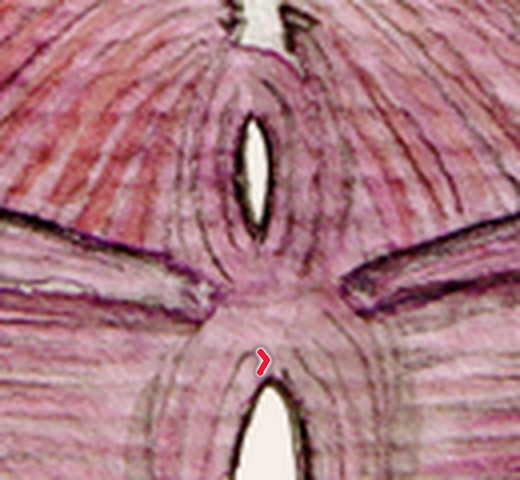
First degree
Skin only. May or may not need stitches.
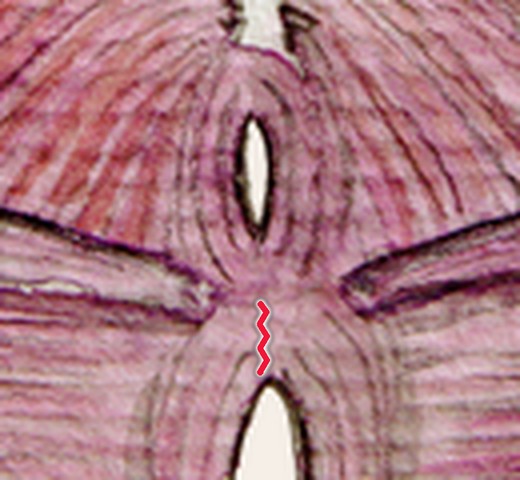
Second degree
Skin and perineal muscle. Usually stitched, similar to an episiotomy.
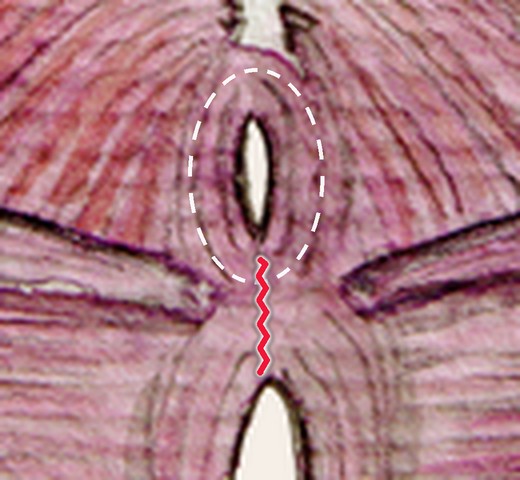
Third degree
Reaches into the anal sphincter. Pelvic floor PT strongly recommended after birth.
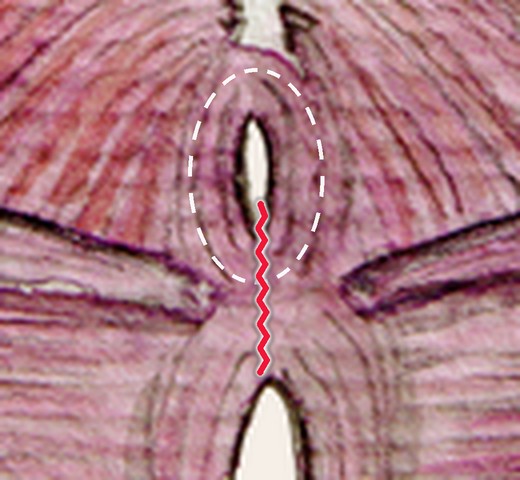
Fourth degree
Through the anal sphincter into the rectal lining. Pelvic floor PT strongly recommended.
What raises the risk of a serious tear
- A first vaginal birth
- A larger baby
- Forceps or vacuum delivery
- A very fast, forceful crowning
- Long, breath-held pushing flat on your back
Some of these are out of your hands. Many are not, and that is where we begin.
Keep it movin'
Birth is primal. Tap into the soft power that lives within.
Garden, squat, lunge, walk, swim, and practice yoga. Move the way women have lived and birthed for thousands of years. Movement during pregnancy prepares your muscles, bones, and ligaments for birth, and it supports your postpartum recovery too. Keep your pre-pregnancy routine as long as it feels good, modifying for your growing belly and shifting energy.
Rehearse your birth positions
In labor, your thinking mind goes quiet, and that is exactly how it should be. Many women drop into a dreamy, inward state, often called "laborland," where time softens and the primal body leads. This slower brain state is often linked with theta brain waves, the same state you touch in deep meditation or just before sleep.
Your body remembers what it has practiced, so rehearse the way you will birth. From about 30 weeks, spend a few minutes a few times a week moving through these positions slowly, with your eyes closed and your breath long, letting yourself sink into that soft, inward space.
Rocking lunge
One knee down, one foot forward, rocking over a birth ball.
Supported kneeling
Draped over a ball or bed, belly hanging, pelvis swaying.
Birth ball circles
Sitting wide on a ball, rolling slow circles and figure eights with your hips.
Supported squat
Holding a partner, counter, or sturdy chair.
In labor, change positions often. Even with an epidural, keep shifting and ask your team to help. A body that keeps moving gives baby room to rotate and descend.
Prep your pelvic floor
You do not have to wait until something goes wrong.
Your pelvic floor is a hammock of muscle layers that holds your pelvic organs and plays a huge role in birth. Perineal stretching gets called the number one way to prevent tearing, but your baby moves through the deeper layers of your pelvic floor before the perineum is ever stretched.
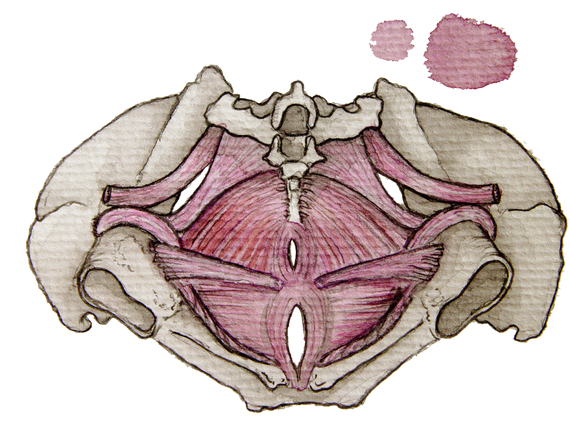
Your pelvic floor and your sense of safety
Your pelvic floor is deeply tied to your sense of safety and security. When your nervous system senses threat, your pelvic floor often braces and tightens, an ancient protective reflex.
And it rarely tenses alone. Your pelvic floor, throat, and jaw are intimately connected, so this guarding often shows up as a clenched jaw, a tight throat, and shoulders creeping up toward your ears, in birth and in your everyday life. The beautiful part: soften one, and the others begin to follow.
Your pelvic floor does not push your baby out. Your uterus does the pushing. Your pelvic floor's job is to soften, lengthen, and yield. Birth prep is not about making it stronger. It is about teaching it to let go on cue.
Ways to begin
- Notice where you grip. Many of us hold the jaw, throat, shoulders, glutes, belly, and pelvic floor all day without realizing it.
- Practice releasing on the inhale, letting your pelvic floor gently descend and widen like a flower opening.
- Breathe into your pelvic bowl in deep, supported squats and child's pose.
- Begin perineal massage around 34 to 36 weeks (see the bonus guide below).
Root into your bones, and breathe
Your somatic connection to your pelvis begins with your bones. First, root into them: feel your sit bones meet the ground, your tailbone, your pubic bone, the whole bowl of your pelvis holding you. Then find your breath in your bones. Only then do we learn to breathe into the pelvic floor muscles that live within them.
In birth, we want your pelvic floor to open, soften, and yield. When pain, tension, or fear arise, its instinct is to tighten and grip. Your breath is the bridge between your nervous system and your pelvic floor, the way you tell your body, again and again, that it is safe to open.

360 Rooting Breath
- Sit tall on a ball or firm cushion and feel your sit bones root down into it. Rest your hands around your lower ribs.
- Inhale slowly through your nose. Feel your ribs widen front, sides, and back as your pelvic floor gently drops and softens.
- Exhale slowly through soft lips, longer than your inhale. Let ribs and belly settle.
- Release your jaw, tongue, shoulders, and glutes. A soft mouth invites a soft pelvic floor.
Breathing baby down
When it is time to push, long downward breaths and low sounds, a deep "ahhh" or "ohhh," help you bear down without clamping. Practice now by toning low sounds on your exhale as you feel your pelvic floor open.
Dilation tells you how open your cervix is. Station tells you how far your baby has descended into your pelvis, from -5 (still high) to +5 (crowning). Being 10 cm does not automatically mean it is time to push.
In hospital settings, women are often coached to push as soon as they are fully dilated, before baby has fully descended, which can mean longer, more exhausting pushing. Breathing baby down and asking to labor down, resting and letting your contractions bring baby lower until you feel a strong urge to push, can shorten your pushing time and may lower your risk of tearing and interventions like vacuum, forceps, or cesarean, as long as you and baby are both doing well.
Research on timing is still mixed, so add laboring down to your birth preferences and talk it through with your provider ahead of time.
Trust your primal body
Meeting the Wild Edge
When you are in tune with your body's signals and primal instincts, you drop into a deeper rhythm of birth that lets your pelvic floor soften and yield. Fear tells the body it is not safe: the pelvic floor tightens and contractions hurt more. You cannot think your way through this. You have to feel your way through it.
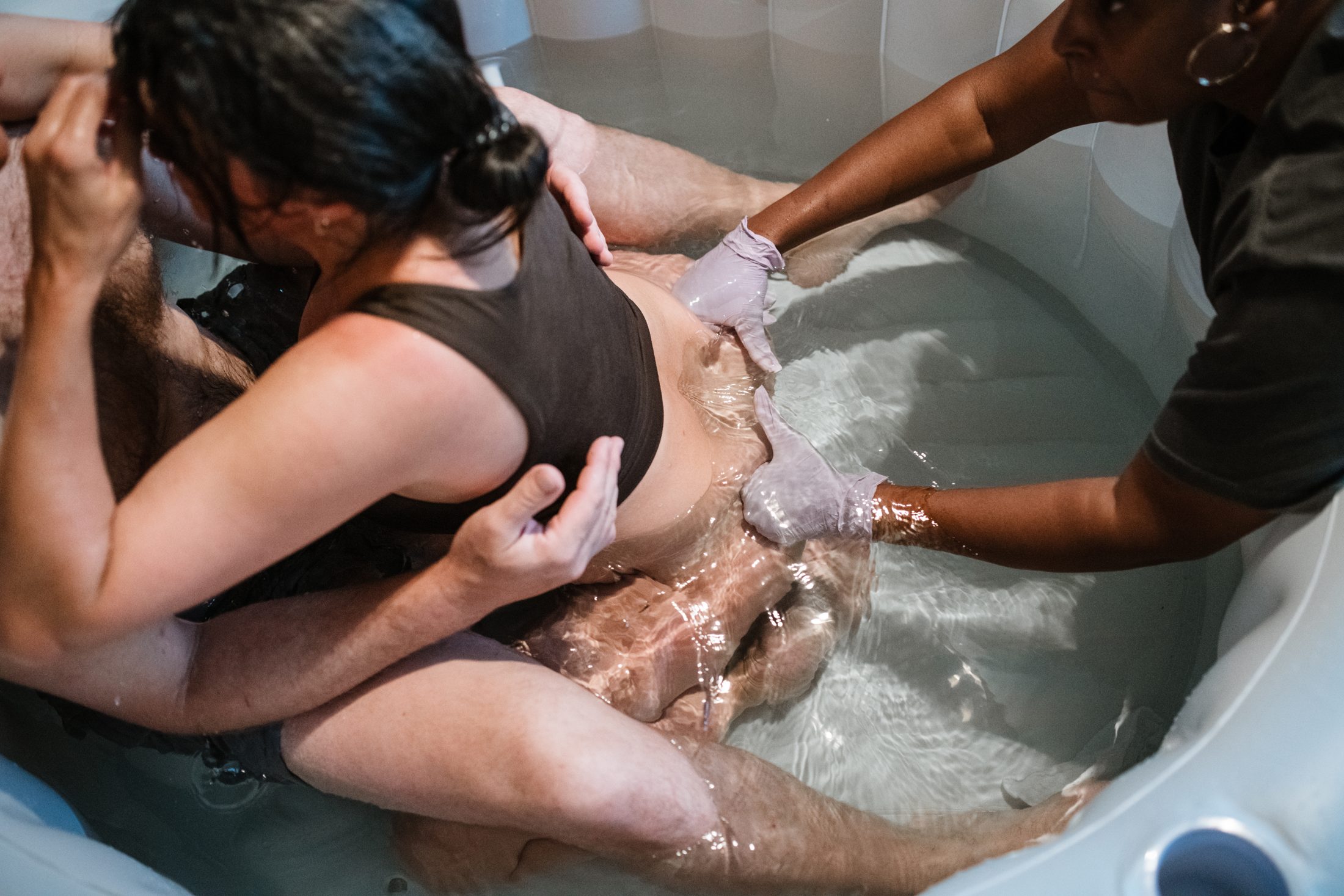
There is almost always a moment, often right before pushing, when the mind says "I can't do this." That is not a sign something is wrong. It is the threshold.
That is the Wild Edge, where the thinking mind steps aside and the wild, knowing body takes the lead.
Prepare to meet your edge
- Drop in daily. Hand on heart, hand on belly. Ask: What do I feel? Where am I holding? What do I need?
- Find your rooting words, like "I am safe, I am open," "It is safe to surrender," "I surrender," or simply "Open." Repeat until they live in your cells.
- Meet your fears now, not in labor. Fear that is witnessed loses its grip.
- Create your nest: dim light, privacy, warmth, and people who make you feel safe.
- Let sound and movement be wild. Moaning, swaying, and roaring are how the body opens.
The Wild Edge of Birth: a transmission
Settle in, close your eyes, and let this recording meet you where words on a page cannot.
This transmission is from my upcoming course, The Wild Edge of Birth.
Trusting yourself also means choosing support when you need it. Surrendering to what is true in your birth can look like an epidural or another intervention. Remember: we can influence birth by how we prepare, but we cannot control it. You can prepare beautifully, do everything "right," and still need intervention. That is not failure. A rooted birth is one where you stay connected to yourself, whatever path it takes.
Invite warmth and a slow, soft crowning
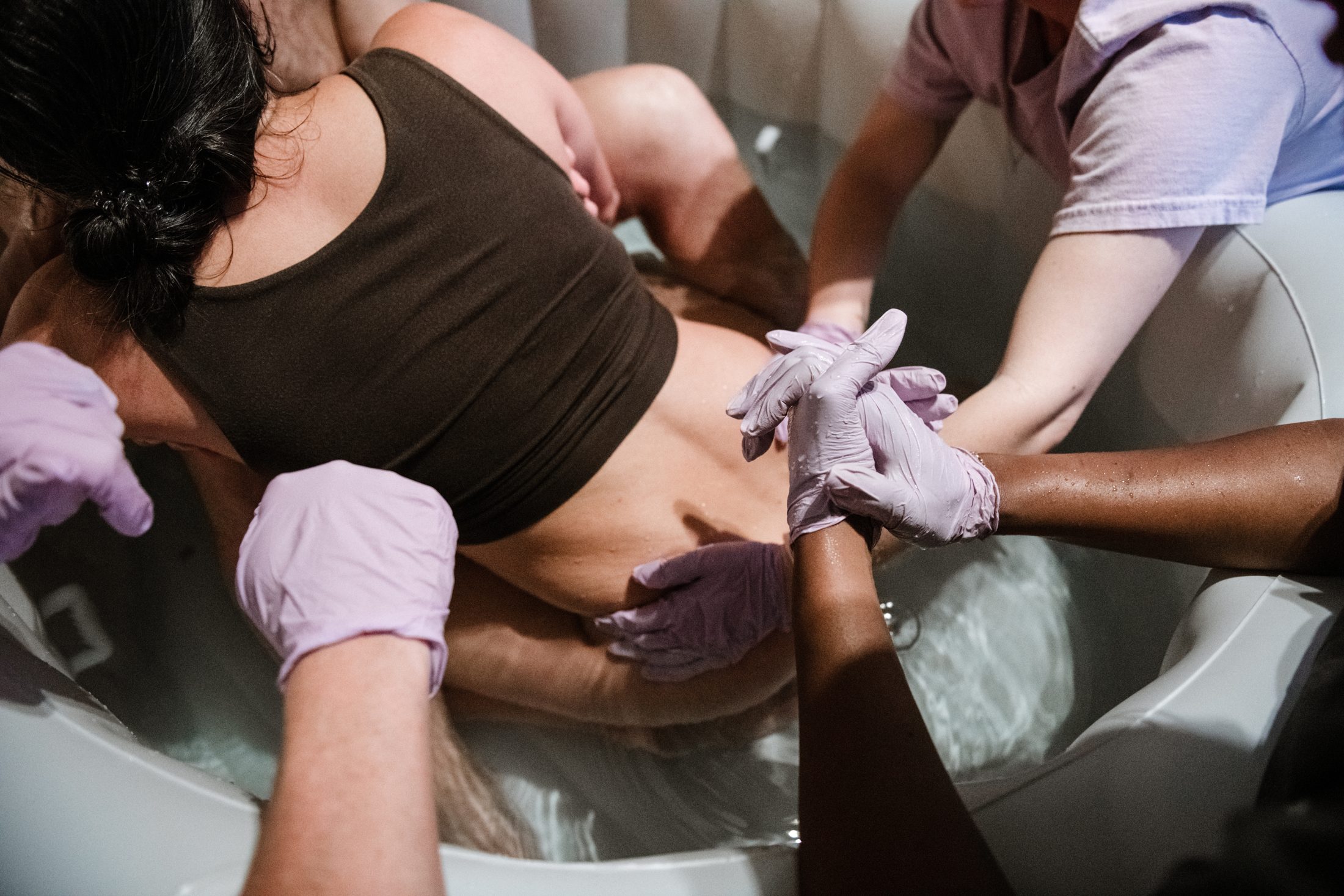
Your perineum stretches best when it is warm and given time. This is one of the most research-supported ways to reduce severe tearing, and it is often left out of birth plans.
Warmth
Labor in a warm tub or shower when you can, and ask your provider for a warm compress on your perineum while you push.
Slow crowning
When you feel the stretch and burn, slow down. Breathe your baby out with soft, panting breaths and let your uterus do the work.
Positions
Side-lying, hands and knees, and kneeling take pressure off the perineum. Flat on your back with legs pulled back adds strain.
Your birth preferences
Ask for warm compresses, freedom to move, pushing with your own urge, and support for a slow, controlled crowning.
Perineal massage
A rehearsal for crowning
Perineal massage gently stretches the perineum, the tissue between your vaginal opening and anus. Research shows it can lower the risk of tears that need stitches and of episiotomy, especially in first births. The stretch and burn you feel is a gentle preview of crowning: each time you meet it with breath instead of bracing, you teach your body what to do on birth day.
Begin at 34 to 36 weeks and continue until labor. Two to three times a week for about 5 minutes is plenty. More is not better.
You have placenta previa, an infection or herpes outbreak, broken waters, preterm labor risk, or were told to avoid penetration.
Step 1: Create your space
- Get comfortable, reclined on pillows, side-lying, or one foot up on the tub.
- Put on music, dim the lights, go slow, be gentle.
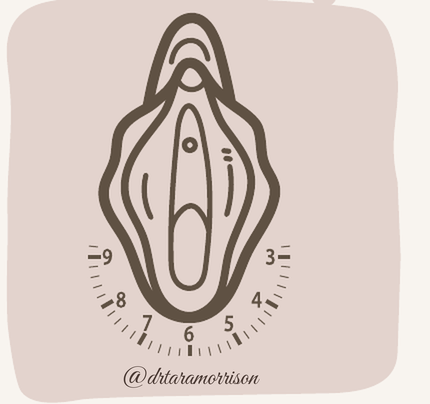
- Find your pelvic clock: 12:00 is up toward the urethra and clitoris, 6:00 is down toward the anus.
Step 2: Find the stretch
- Apply coconut oil, olive oil, or water-based lube to your finger, thumb, or wand.
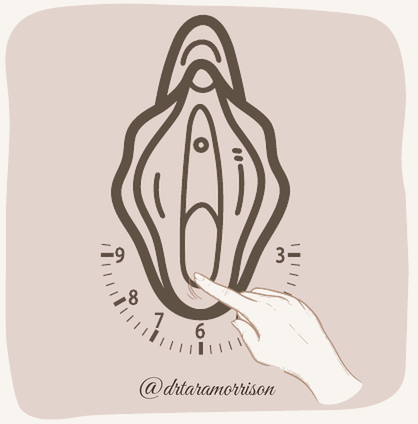
- Insert to about the first knuckle at 6:00 and gently press down toward the anus.
- Hold 30 to 90 seconds, breathing into the stretch.
- Stretch, tingle, or burn is OK. Pain is not: ease your pressure.
Step 3: Move around the clock
- Slowly sweep in a "U" from 6:00 toward 3:00, back to 6:00, then toward 9:00, and back again.
- Pause wherever you feel tension and breathe into it until it softens.
- If it feels comfortable, add a second finger to deepen the stretch.
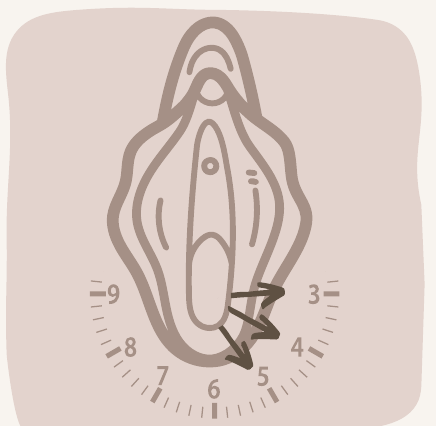 6:00 toward 3:00
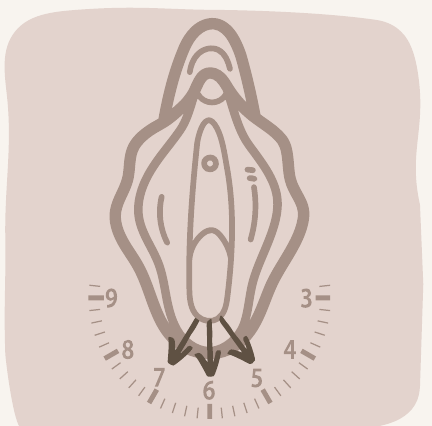 Back through 6:00
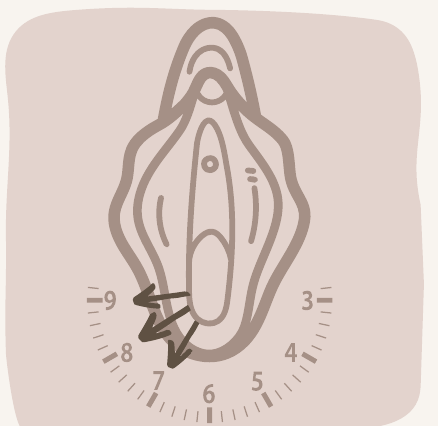 6:00 toward 9:00
Tips for meaningful massage
- Breathe and sound. Use your 360 Rooting Breath and low toning during the stretch. You are rehearsing crowning.
- Vary your positions, like you will in birth: a leg up on the tub, lying on the bed, sitting on the toilet.
- Partners: let the birthing person lead the pace and pressure. Breathe together.
- Doing it yourself? A pelvic wand or dilator helps you reach around your belly. I like Frida Mom and Intimate Rose.
- It is optional. If it does not feel right, physically or emotionally, honor that. There are many ways to prepare.
Perineal massage vs. pelvic floor massage
Perineal massage works with the first, most superficial layer of your pelvic floor. In pelvic floor birth prep sessions, we go deeper, working with the second and third layers of muscle using specific internal techniques so they can lengthen, soften, and coordinate for birth.
A pelvic floor PT who specializes in birth prep can assess your mobility and strength, find holding you may not know is there, and teach you to push in a way that lowers your risk of tearing.

Want to go deeper?
I'm Dr. Tara Morrison, DPT, creator of Somatic Pelvic Care and founder of Sacred Bloom Pelvic Care. Together we prepare your body and your nervous system: hands-on pelvic floor work, breath and pushing practice, and the inner trust to meet your Wild Edge rooted in yourself.
As a thank you for reading, enjoy 50% off your first 90-minute 1:1 session with me.
Start with a free 20-minute discovery call with my team. We'll answer your questions and get you scheduled with me. Mention this guide on your call to secure your 50% off.
Book your free discovery callThe Wild Edge of Birth
My full course for preparing your body, your pelvic floor, and your nervous system to meet the Wild Edge. Join the waitlist to be the first to know when doors open.
Join the waitlist